Read Montaigne's Essays in Modern English
“I dive in without planning or design; the first word begets the second, and so on until the end.” -Michel de Montaigne, ca. 1580
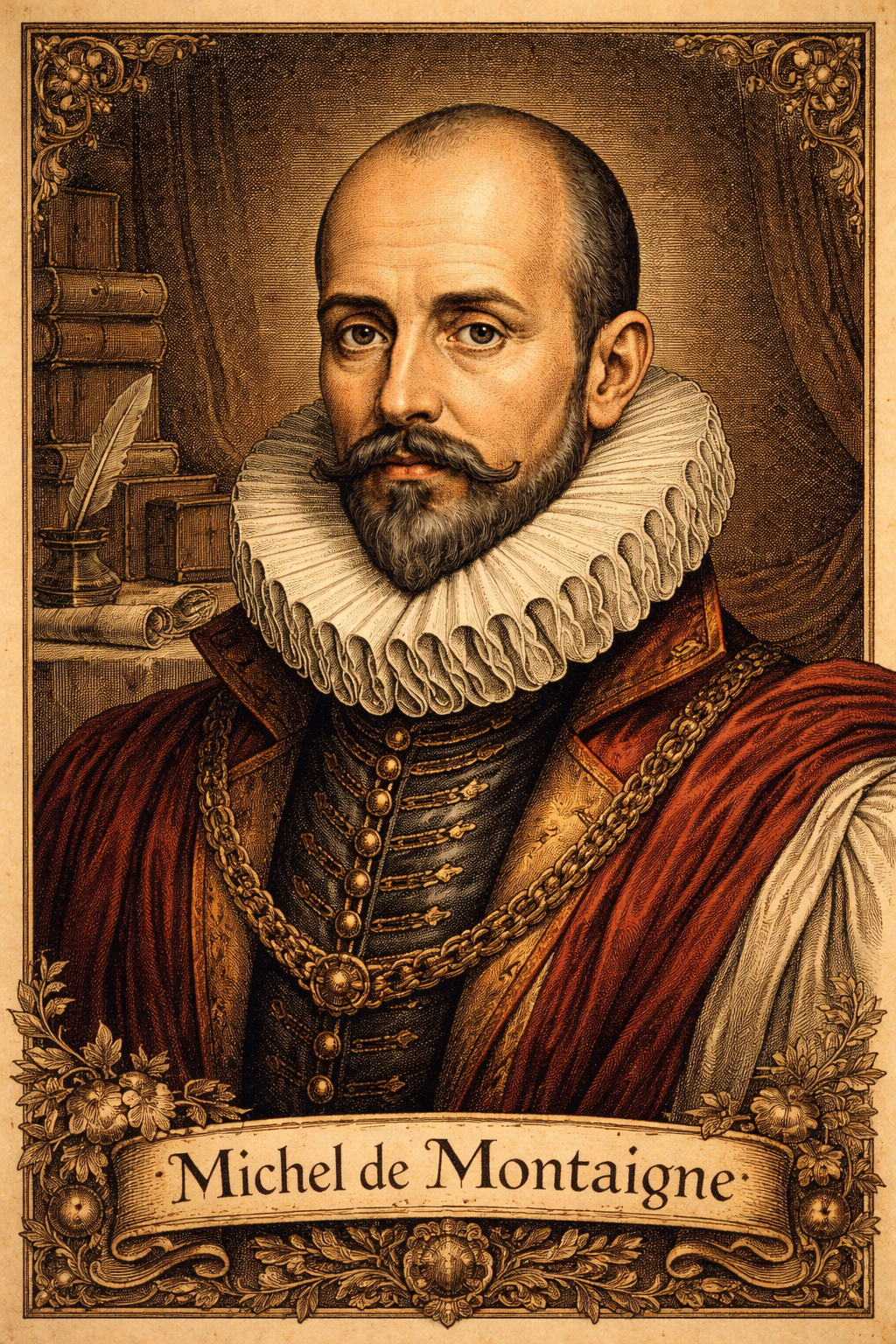
In 1572, a French nobleman retired to his castle tower to think about life. He sat down in his study, quill dipped in ink, and simply put his thoughts to paper as they came, embracing the meanderings of his musings as he explored various topics of practical philosophy. The resulting writing proved so influental even Shakespeared cribbed from it, while Friedrich Nietzsche lauded it thus: "That such a man [Montaigne] wrote has truly augmented the joy of living on this Earth." Today, we refer to his bite-sized pieces as "essays"—from the French essayer, meaning "to attempt"—the exact word Montaigne himself chose to describe his groping for insight through writing.
Themes within the Essays
Across 107 essays divided into three books, Michel de Montaigne muses on a wide range of questions such as
- What makes a friend?
- Should we punish bad deeds that yield good outcomes?
- Is it wise to aim for immortality through literary contributions?
Montaigne in Modern English
We generated modern versions of Montaigne's essays using the rewrite feature of the magicreader Chrome extension, based on original text sourced from Project Gutenberg. Magicreader's rewrite feature leverages a combination of AI models to adapt the text. We asked the system to match the tone of a bestselling author addressing a contemporary audience, and would be happy to hear your feedback. While reading, you can seamlessly toggle the original version by pressing Ctrl-S on Mac / Alt-S on Windows. (S for “style”; note that these commands will not conflict with the keyboard shortcuts for saving, which use Cmd-S on Mac and Ctrl-S on Windows.) Happy reading!